
Chapter 1: The Project Starts Before Delivery
WFL RESOURCE Book 1 ends with Northline Studio able to operate recurring work more deliberately. It also exposes a specialized weakness: generic onboarding works for simple services, but complex project starts require agreement translation, tailored intake, readiness, handoff, kickoff, and first-week control. Shortly afterward, Northline wins Harbor Home Services. This chapter begins from that exact state. |
The agreement is signed. The client is excited. The first invoice or deposit has been handled. Someone on the delivery team sees a start date on the calendar and begins creating tasks.
It feels like the project has started well.
But the team does not yet know who can approve the work. The client has not provided access to the existing website. The sales conversation included a launch-date assumption that never made it into the written agreement. One stakeholder believes the work includes rewriting all website content; another expects only a design refresh. The person who sold the engagement is already focused on the next opportunity.
Nothing has visibly failed. No deadline has been missed. No angry email has arrived. Yet the conditions for several future problems are already present.
This is one of the central ideas behind the Client Start System: a project can begin going wrong before anyone performs the first deliverable-producing task.
For a small service business, the transition from agreement to execution is easy to underestimate. It may look like a short administrative interval: send a welcome email, collect a form, schedule a meeting, and open a project folder. In practice, this interval determines whether commercial commitments become usable delivery instructions. It is where the business must convert what was discussed and sold into a shared understanding of what will be done, who will participate, what must be supplied, what decisions remain open, and whether the work is actually ready to start.
Project-management guidance describes initiation as the work that converts agreements, goals, and assumptions into an organized starting point. PMI has similarly described initiation as the point where feasibility, constraints, and the team are brought together so work can move forward (Rockwood, 2016). The Client Start System adapts that logic to the realities of consultants, agencies, freelancers, independent professionals, and small service teams.
You do not need an enterprise governance process for every engagement. You do need enough control to prevent enthusiasm from being mistaken for readiness.
The First Day Is Already an Outcome
Owners often judge the beginning of an engagement by visible motion. A folder exists. The kickoff invitation has been sent. Tasks appear on a board. Someone has begun research. These signals feel productive because they are easy to see.
The stronger question is not, “Have we started doing things?” It is, “Do we have the conditions needed to do the agreed work responsibly?”
Those conditions usually include:
a usable understanding of the outcome the client expects;
a clear description of the agreed deliverables and meaningful exclusions;
identified client and provider contacts;
known approval and decision authority;
the information, files, access, and dependencies required to begin;
a workable view of timing, milestones, review periods, and client obligations;
documented assumptions and unresolved questions; and
agreement on how communication, feedback, decisions, and changes will be handled.
If those conditions are weak, activity can make the situation worse. Work products begin to embody untested assumptions. The team invests hours in a direction the client may not recognize. Schedules are built around inputs that have not been promised. A draft becomes the first time important stakeholders realize they expected different things.
The beginning of a project therefore produces an outcome whether the business manages it deliberately or not. It produces either a controlled transition into delivery or a collection of hidden uncertainty that will travel with the work.
Seven Hidden Costs of a Weak Start
A weak start rarely appears as one dramatic failure. It creates small losses that accumulate across the engagement.
1. Rework
Rework occurs when the team must repeat, replace, or substantially revise work because an expectation, requirement, input, or decision was missing or misunderstood. Some revision is normal in service work. Avoidable rework is different. It is created by information that could reasonably have been confirmed before execution.
A designer builds the wrong page structure because the final navigation was never approved. A consultant analyzes data that the client later says is incomplete. A project manager builds a schedule around a decision-maker who is unavailable for two weeks. Each event consumes capacity without moving the engagement proportionally closer to its intended result.
2. Artificial delay
Not every delay is caused by slow work. A project may appear active while waiting for credentials, files, feedback, subject-matter input, or an approval path. Starting before these needs are visible does not eliminate the wait. It moves the wait into the delivery schedule, where it is more disruptive and harder to explain.
The result is artificial delay: time lost not because the work was inherently difficult, but because the conditions for performing it were not established.
3. Expectation divergence
Expectation divergence begins when two reasonable interpretations of the engagement are allowed to develop separately. The provider believes the assignment is a website redesign. The client believes it includes messaging strategy, content creation, photography coordination, and launch support. Both may have evidence from earlier conversations. Neither has a controlled statement of how the final agreement will operate.
The longer the team works before discovering the divergence, the more emotionally and financially difficult it becomes to resolve.
4. Capacity distortion
Small businesses make staffing and scheduling decisions with limited slack. An engagement that quietly needs more revisions, stakeholder interviews, or client coordination than expected consumes capacity reserved for other work. The owner may interpret the problem as poor productivity when the real problem is an incomplete start.
Capacity distortion also affects sales. A business may accept another engagement because the first project looks smaller on paper than it is operationally. The missing work has not disappeared; it has simply not been made visible.
5. Weak accountability
When responsibilities are implied, people can participate without owning an outcome. The client assumes the provider will gather content. The provider assumes the client will deliver approved copy. Each side may be working in good faith, but the task has no clear owner, due date, or completion condition.
Weak accountability is especially damaging when an engagement involves several stakeholders. The person who attends the kickoff may not be authorized to approve the result. The owner may expect an account manager to coordinate inputs, while the account manager expects the project lead to do it. Work then advances through personal follow-up rather than a repeatable system.
6. Confidence loss
Clients often experience the operating system of a provider before they experience the final deliverable. Repeated questions, forgotten commitments, inconsistent terminology, and unclear next steps suggest that the provider is not in control of the engagement.
The provider may be technically excellent and still create doubt through a disorganized start. Confidence is easier to preserve than to rebuild.
7. Risk transferred downstream
An unresolved question does not become harmless because work begins. It becomes a project risk carried into a later stage.
If the client has not confirmed who owns final approval, that uncertainty will reappear when a deliverable needs signoff. If the provider does not know whether a system can be accessed, the uncertainty will reappear when configuration begins. If a start date depends on client-supplied content, the uncertainty will reappear in the schedule.
A controlled start does not remove every risk. It identifies which risks have been resolved, which have an owner, and which conditions the business is knowingly accepting.
Activity Is Not the Same as Readiness
Small teams are vulnerable to start pressure. A new engagement represents revenue, momentum, and a promise made to a client. Waiting can feel unhelpful, particularly when someone says, “We can begin with what we have.”
Sometimes that is the correct decision. The mistake is making it without understanding what is missing and what the partial start will affect.
Readiness is not perfection. It is a reasoned decision that the work can begin within understood conditions.
The Client Start System uses three eventual readiness outcomes:
Ready: required conditions are present, or remaining minor items do not threaten the planned start.
Conditionally Ready: work may begin, but named conditions, owners, and deadlines must be controlled.
Not Ready: one or more blockers make the planned start unreliable or inappropriate.
The full readiness gate appears later in this book. At this stage, the distinction matters because many teams operate with only two informal choices: start or do not start. That encourages them to hide uncertainty so they can preserve a date.
A conditional decision is more honest. It allows work to begin where appropriate while protecting the business from pretending that missing inputs do not matter.
Five Failure Patterns at the Start of Client Work
Weak client starts tend to repeat recognizable patterns. Naming them makes them easier to see.
The signature-as-starting-gun pattern
The agreement is signed and the delivery team immediately begins work. No one translates the agreement into operating requirements. Important sales notes remain in an inbox. The project is treated as ready because the commercial step is complete.
This pattern confuses authorization with preparation.
The inbox-handoff pattern
The delivery team receives a forwarded email chain, a proposal, and a short message such as, “Everything you need should be here.” The recipient must reconstruct the engagement from documents created for different purposes.
An inbox is a communication record, not a controlled handoff. It may contain valuable context, but it does not identify which statements are final, which were exploratory, and which obligations were superseded by the agreement.
The silent-assumption pattern
Experienced people fill in gaps automatically. That skill helps work move, but it can also hide decisions.
A provider may assume that “website copy provided by client” means final, approved, page-specific copy will arrive before design begins. The client may assume it means they will provide rough source material that the provider will rewrite. Neither interpretation is unreasonable. The problem is that the assumption remains silent.
The ceremonial-kickoff pattern
The kickoff is scheduled because professional projects have kickoff meetings. The agenda includes introductions, an overview, and next steps, but difficult operational questions are avoided so the meeting feels positive.
The team leaves with enthusiasm but not alignment. The meeting has created social momentum without resolving readiness.
The calendar-dictated-start pattern
The start date was promised, announced, or placed in a scheduling tool, so work begins even though critical inputs are missing. The calendar becomes more authoritative than the actual condition of the engagement.
A date should guide preparation. It should not erase evidence that preparation is incomplete.
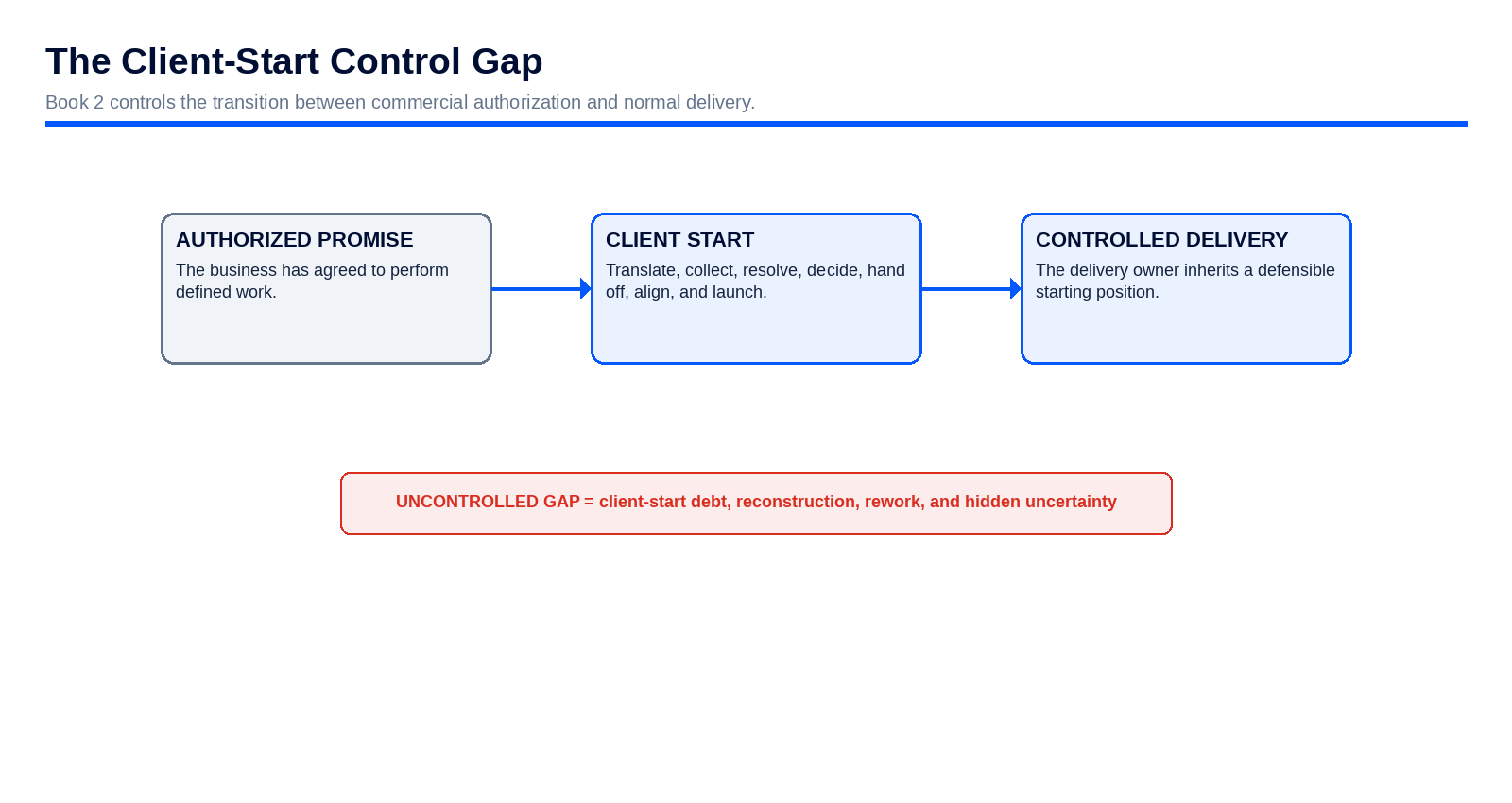
Figure 1.1 - The Client-Start Control Gap
The Minimum Viable Start System
The answer is not to bury small engagements in forms. A $1,500 assignment and a $150,000 engagement do not need the same amount of administration. Both need a complete control path scaled to consequence.
1. Receive the authorized engagement and identify the governing sources.
2. Translate commercial commitments into delivery-usable requirements without changing their authority.
3. Collect the information, access, people, decisions, and evidence the work actually needs.
4. Resolve gaps, contradictions, assumptions, and dependencies before they become hidden delivery risk.
5. Make an explicit readiness decision and state what work is permitted or restricted.
6. Build the Client Start Position, brief the delivery owner, test understanding, and obtain acceptance.
7. Use kickoff to reconcile interpretation, authority, working rules, and remaining decisions.
8. Launch only the permitted first-week work, control remaining conditions, and transfer the engagement into normal delivery.
The objective is minimum necessary control: enough structure to make the transition visible, repeatable, reviewable, and defensible without making the administration cost more than the risk it manages.
Client-Start Debt
Businesses sometimes recognize technical debt: shortcuts in a system that create future maintenance work. Client engagements can accumulate a similar form of debt at the start.
Client-start debt is the future work created when the business moves unresolved setup questions into delivery without naming or controlling them.
Examples include:
an approval owner that will have to be identified later;
a missing dependency that will interrupt a later task;
a scope boundary that will have to be negotiated after work appears;
a schedule assumption that will have to be defended when a milestone slips;
a client responsibility that will require repeated follow-up; and
an access need discovered only when a specialist is ready to use the system.
Not all start debt is avoidable. A client may not be able to provide a final answer until the work reveals new information. A third-party dependency may remain uncertain. The problem is not that uncertainty exists. The problem is allowing the delivery plan to treat unresolved uncertainty as confirmed fact.
A useful start system records accepted debt. If competitive research can proceed while technical access is outstanding, the team documents that condition and limits the work released. If the client cannot name the final approver until an upcoming leadership meeting, the team records when the decision will occur and which deliverables cannot move past review until it does.
This creates a disciplined difference between “We forgot to resolve it” and “We knowingly accepted it under these conditions.”
What a Strong Start Can and Cannot Prevent
A controlled start can reduce preventable confusion. It cannot make client work perfectly predictable.
It can help the business:
identify missing information earlier;
expose different interpretations before they become embedded in deliverables;
clarify ownership and decision paths;
sequence work around real dependencies;
show which dates depend on client action;
preserve commercial and sales context during handoff; and
create written evidence of decisions and next steps.
It cannot guarantee that:
the client will always respond on time;
stakeholders will never change their minds;
a requirement will never evolve;
a third party will perform as expected;
every estimate will be correct;
no change request or disagreement will occur; or
the engagement will achieve the intended business result.
This distinction protects the system from becoming a promise it cannot keep. The value of the Client Start System is not certainty. Its value is earlier visibility, better decisions, and clearer accountability when uncertainty remains.
Illustrative Example: Northline Studio and Harbor Home Services
Northline Studio is a fictional small firm providing website and digital-service work. Harbor Home Services is a fictional regional home-services company. Their engagement covers a website redesign and an improvement to the online customer inquiry workflow.
The agreement is signed on a Friday. Harbor expects the project to begin Monday. Northline could create a project folder, assign a designer, and start reviewing competitor sites.
Instead, the delivery lead performs a short client-start review and finds five uncertainties:
the agreement refers to “existing website content” but does not say whether that content is final;
the client’s operations director attended the sales meetings, but the owner appears to control final approval;
Northline does not yet have analytics, content-management, or domain access;
the proposed launch date assumes feedback within two business days, but that response expectation is not assigned to anyone; and
the inquiry workflow touches a third-party scheduling system that was discussed but not named as a deliverable.
None of these findings proves the project should stop. Together, they show that the engagement is not automatically ready merely because it has been sold.
Northline can now decide what may begin safely. Competitive research might proceed. Final navigation, content migration, and integration design should wait until the related conditions are confirmed. The team has replaced a vague start with a controlled one.
Diagnose Your Current Client Starts
Rate each statement as Usually True, Sometimes True, or Rarely True.
1. The delivery team receives the final agreement and the relevant sales context before work begins.
2. Someone identifies the commitments in the agreement that affect delivery.
3. The client knows exactly what information, access, and decisions must be provided.
4. Deliverables and meaningful exclusions are understood by the people doing the work.
5. Client and provider responsibilities have named owners.
6. Approval authority is identified before the first deliverable needs approval.
7. Schedule assumptions and client review periods are visible.
8. Contradictory information is resolved rather than passed downstream.
9. The business can distinguish a blocker from a manageable open item.
10. The kickoff produces decisions, owners, and next steps in writing.
11. The first week begins from a confirmed plan rather than an email chain.
12. The business reviews what was missed and improves the next client start.
If most answers are Usually True, the business probably has a functioning client-start system, even if it has never used that name. If many answers are Sometimes True, the process depends on individual effort and memory. If many are Rarely True, the business is accepting avoidable delivery risk each time it wins work.
The purpose of this diagnosis is not to create a score for comparison with other companies. It is to identify where the transition into delivery depends on luck, personal habit, or reconstruction.
When the Control Breaks: Work Starts Because the Calendar Says So
The most common early failure is not an obvious mistake. It is work beginning because the start date has arrived while the underlying start position remains unclear. The team may believe it is preserving momentum, but it is actually converting unresolved questions into delivery debt.
If work has already begun, do not try to hide the condition by retroactively marking the engagement ready. Freeze only the work that depends on unresolved scope, authority, access, or specialist conditions. Reconstruct the current source set, identify what is true, separate permitted work from restricted work, and make a readiness decision from the current evidence.
EVIDENCE RULE The corrective record should show what work began, what authorization supported it, what uncertainty was discovered, what work is now permitted or restricted, who owns each open condition, and what decision governs the next step. |
Operating Playbook: Stabilize an Uncontrolled Start
1. Identify the governing agreement and current source hierarchy.
2. List work already started and classify whether each item is clearly authorized.
3. Surface missing authority, access, inputs, dependencies, and assumptions.
4. Stop only the work that would conceal, violate, or materially depend on an unresolved condition.
5. Assign owners and decision authorities for the open conditions.
6. Make and communicate an explicit readiness decision for the next work to be released.
7. Update the Client Start Position and the delivery system so the same uncertainty is not reconstructed again.
Reader Practice: Diagnose a Recent Start
Choose one client project that began within the last six months. Use the twelve diagnostic statements in this chapter to examine how that engagement actually started.
Mark each statement Usually True, Sometimes True, or Rarely True.
Identify the three answers that created the greatest delivery exposure.
For each one, name the missing evidence, decision, owner, or control.
Record one change that would make the next comparable start more controlled.
Do not turn the result into a performance score. Use it to identify where the start still depends on memory, individual effort, or luck.
Chapter 1 Takeaway
The first deliverable is not the first meaningful project outcome. The first meaningful outcome is a controlled start.
Before work begins, the business is already making choices about scope, timing, ownership, information, client expectations, and risk. A deliberate client-start system makes those choices visible. An informal system still makes them, but often through silence.
In the next chapter, we will define the precise window this system controls—where it begins, where it ends, what it includes, and what it intentionally leaves outside.